Art people
Andy Warhol’s New York: from shop windows to the Factory
Shoe ads, soup cans and a silver studio: how Warhol turned New York’s habits of looking into art.

Photo Credit
Image courtesy of © Ajay Suresh · CC BY 2.0 via Wikimedia CommonsAndy Warhol arrived from Pittsburgh in 1949 and spent his first decade drawing for magazines and dressing shop windows. Then he painted 32 soup cans by hand, silvered a studio on East 47th Street and made the city’s appetite for images his subject.
Start at the Museum of Modern Art with Campbell’s Soup Cans, and check that the work is on view before you build a day around it. Then read the Whitney’s record of its 2018 retrospective. Between them they cover the New York years in which a magazine illustration, a room full of people and a supermarket label all became raw material for the same career.
A commercial artist learns the city
Warhol studied pictorial design at the Carnegie Institute of Technology and moved to New York in 1949. His first career here was commercial art: fashion drawings for magazines, shoe advertisements and department-store windows. It was a hard school. A line had to cross a printed page quickly and still read. The later paintings came from a man who knew exactly how an image reaches the public before he ever asked what it meant on a gallery wall.
Thirty-two cans, painted by hand
Campbell’s Soup Cans dates from 1962: thirty-two canvases, one for each variety the company then sold. MoMA points out the detail that changes how you see them. For all their look of mass printing, they were painted by hand. Hang them together and the eye does what it does at a supermarket shelf, scanning near-identical objects for the one difference. The labour sits just under the mechanical shine.
The canvases look as if a machine made them. A man with a brush did, thirty-two times.
The Silver Factory
The studio known as the Factory drew performers, writers and hangers-on, and it was a film set as much as a workshop. Its first home, at 231 East 47th Street, was covered in foil and silver paint by Billy Name, who also photographed the people passing through. The room became part of the work. Whitney’s retrospective gave the films and the downtown scenes the same weight as the paintings on the postcards.
Union Square and the late collaborations
In 1968 the Factory moved to the Decker Building on Union Square West, a narrow Moorish-style tower that is now a city landmark. Its ornament still repays a look up from the square. In the 1980s Warhol painted with Jean-Michel Basquiat, around 160 canvases in all, and on 23 July 1985, at Lincoln Center’s Vivian Beaumont Theater, he drew Debbie Harry on a Commodore Amiga in front of an audience.
Both were new ways of making a picture public, which had been his subject all along.
Why it's on our list
- A commercial artist learns the city
- Thirty-two cans, painted by hand
- The Silver Factory
- Union Square and the late collaborations
Location
The map comes from Google Maps, which sets its own cookies once it loads.
More in depth
 Art peopleJean-Michel Basquiat: from SAMO to paintings in his own nameBrooklyn, downtown walls and Great Jones Street: the short, fast New York life of Basquiat
 Music peopleDebbie Harry and the sound Blondie carried out of downtown New YorkFrom Max’s Kansas City to Heart of Glass and a Warhol portrait drawn on a computer.
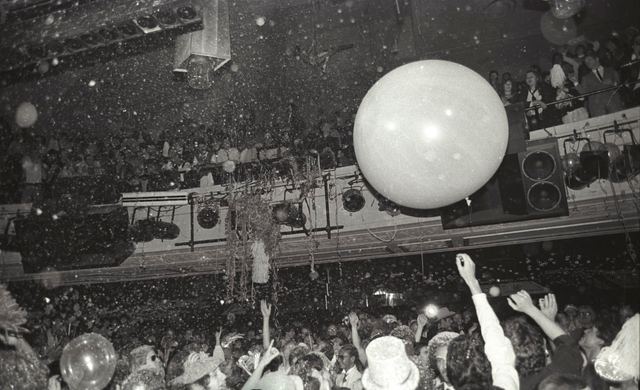 Night lifeStudio 54: the nightclub that went back to being a theatreAn opera house, a TV studio, the most famous door in disco and, since 1998, a Broadway stage again.